
Saudi Founding Day and National Day
CollectionSome free

Saudi Founding Day and National Day

5 places

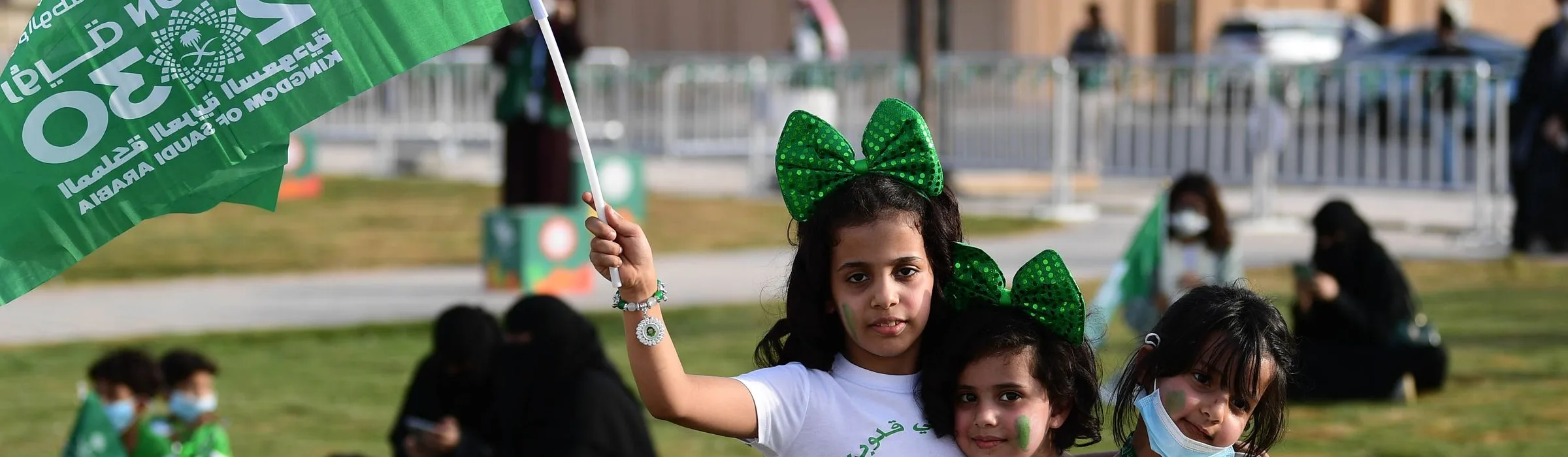
Twice a year the city turns green. Founding Day on February 22 marks the first Saudi state, founded at Diriyah in 1727, and National Day on September 23 marks the kingdom's unification in 1932. Both bring flags, green outfits and special programs to the places where that history happened. Here's what we checked, from the mud-brick lanes of At-Turaif to the fort King Abdulaziz retook in 1902.

Share with another parent

What’s in this collection

5 items
Heritage site
Where
Diriyah
Cost
Paid

At-Turaif is the mud-brick district where the first Saudi state had its capital, from 1727 until the Ottoman siege of 1818. UNESCO listed it in 2010 for its Najdi architecture.

Kids walk restored lanes past carved walls and palaces, including the 10,000-square-meter Salwa Palace, the old bath house and the Imam Mohammad bin Saud Mosque. Bujairi Terrace, across Wadi Hanifah, has restaurants looking over the site.

Read More →
Park
Where
Al Bujairi
Cost
Paid

Bujairi Terrace is a 15,000-square-meter dining and shopping area built in traditional Najdi style, with more than 20 local and international restaurants, some of them Michelin-starred. It looks straight across Wadi Hanifa to the restored ruins of At-Turaif, and there is a free carousel.

The heritage park around it holds the restored al-Zawiharah mosque, known for its underground chamber, and the al-Sarikhah mosque on its west side.

Read More →
Museum
Where
Ad Dirah
Cost
Free

Masmak is a mudbrick fort built in 1865, with four conical watchtowers about 18 meters high and a palmwood gate with a small door cut into it, big enough for one person. It was the scene of the 1902 Battle of Riyadh, when King Abdulaziz retook the city. Inside are a mosque, a majlis, a well, and exhibits of scale models, old photos, maps, antique guns and traditional costumes.

Read More →
Historic site
Where
Al Murabba
Cost
Paid

King Abdulaziz lived and ran the country from this two-story palace from 1938 until 1953. It is built from mud, stone, acacia trunks and palm fronds, with rooms set around a central courtyard and the king's summer and winter councils upstairs.

The palace connects to the King Abdulaziz Memorial Hall, which shows his sword "Ruqban," his clothing, his private library and photos from the discovery of oil.

Read More →
Museum
Where
Al Murabba
Cost
Paid

The national museum tells the story of the Arabian Peninsula in eight permanent halls over two floors, from its earliest people to the Hajj. The visit starts in the Man and the Universe hall, with a large fragment of meteorite from the Wabar craters, Platybelodon and Ichthyosaur skeletons, and interactive displays on the solar system and plate tectonics.

The curved facade was inspired by the nearby red sand dunes.

Read More →