
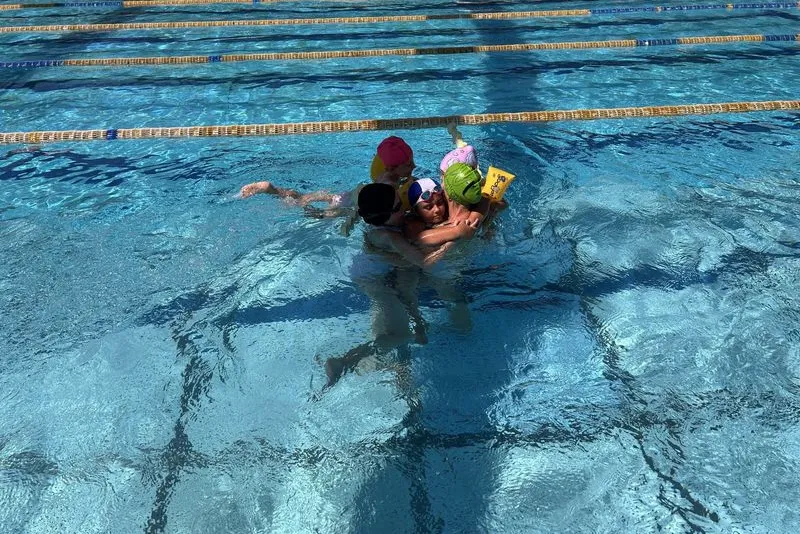
A federal swim school where kids learn the strokes and move up through levels with qualified instructors. Groups are formed by age and level, so a class can mix kids up to two years apart. Parents can watch from a railed-off area at pool level.

Swimming is the after-school activity many families sign up for first, and a good school is the difference between a kid who dreads the pool and one who asks to go back. These are swim schools and pool courses for kids. Open a card to see the ages each school takes, where it swims and how to sign up.
A federal swim school where kids learn the strokes and move up through levels with qualified instructors. Groups are formed by age and level, so a class can mix kids up to two years apart. Parents can watch from a railed-off area at pool level.
A federal swim school running since 1973 in Talenti. Kids are grouped by age for the time slot, then split by level inside it, each with an individual learning path. A child who is ready moves up a group without changing slot. Progress and badges show in the club app, updated about every two months. Parents watch from a balcony or the waiting room.
A neighborhood swim club off Via Cristoforo Colombo that has taught Rome kids since 1970. Children stay in one course all season and climb a ladder of graded badges: kicking with a float first, then full backstroke and freestyle, breaststroke, butterfly and lifesaving skills, with a dive test at every level. It suits families who want steady, structured lessons through the school year rather than drop-in pool time.
Swimming lessons for babies and young children built on the BimbiPiù Acquatici method, which the school has refined over 30 years. Every course starts with a parent in the water: holds, songs, massage and gentle first dives for babies, then play-based work toward swimming alone in deep water, with no armbands or floats. Kids move on without a parent once they can manage on their own.
Seven-level swim school in a covered 25 m pool with six lanes. Kids start with water confidence or beginner groups, work through numbered badges up to the four strokes, then move to technique and pre-competitive training. A badge exam closes each term. Suits first-timers and kids who already swim.